
Author: suzanne101

  • There’s No Such Thing as a ‘Slow’ or ‘Lazy’ Brain

    There’s No Such Thing as a ‘Slow’ or ‘Lazy’ Brain

    “Being open about the way my brain processes the world, I’ve noticed, encourages others to reveal their own differences. It creates a different dynamic in the room, where the energy is open and honest. It’s a dynamic that I strive for all children — especially neurodivergent youth —to experience.”

    The first time I remember feeling different from others was in primary school. I was about 6 years old, and the local firefighters had just wrapped up their visit to our school (a highly anticipated event). We were to spend the remainder of the day drawing and coloring. The day couldn’t get any better!

    I gazed at my teacher for instructions, but as the words left her mouth, they floated into a pink twisty cloud before they evaporated into thin air, as they always seemed to do.

    I asked, “Miss, can we draw anything?”

    “Yes, of course,” she said. “And make it as big and colorful as you want.”

    So off I went. I was determined to use every crayon we had. As I drew, a thought entered my head: Why weren’t my classmates using all the colors like I was? I mean, that’s what the teacher had told us. It was an unequivocal, clear instruction. They’re silly. They didn’t listen. I sniggered to myself, so proud of my listening skills as I continued to draw.

    When I finished, I confidently marched up to the teacher to show her my drawing. The reaction on her face wasn’t what I was expecting. “Oh, that’s very nice, but why have you drawn a set of balloons?” she asked.

    All of a sudden, my stomach curled inwards. I felt heat rising from my neck, up through my cheeks, almost in perfect time to the rising chorus of laughs throughout the room.

    “Oh no, she drew some balloons!” a student said. As I dared myself to gaze around the class, I noticed, to my horror, drawing after drawing of fire engines. Of course, some kids had only managed to draw a couple of wheels or the beginnings of a fireman, but there was no doubt that each and every kid in that class had followed what the teacher had asked them to do. Except me.

    And so began my introduction to feeling like the one who never quite got it.

    Understanding the Neurodivergent Brain

    My life has been peppered with times when my brain didn’t process information in the same way that my peers’ brains had. In those moments, I was often brought back to the acute vulnerability I felt as a child.

    But since becoming a learning differences specialist, I have been fortunate to learn a lot more about brain differences. I understand that we all process and learn differently — we are not robots designed to perfectly compute every piece of information we receive in the same manner. I also understand that differences in cognitive processing can affect areas like attention, memory, focus, and problem-solving, and impact so many areas of life, especially for neurodivergent individuals.

    I know and appreciate the fact that intelligence is multifaceted and complex, and that we all exhibit unique strengths across different domains of intelligence. That intelligence can’t be reduced to a single type. Some people may excel in logical reasoning, while others may have exceptional artistic or interpersonal skills. Traditional tools that measure intelligence, such as IQ tests, only capture a limited aspect of human intelligence and may not reflect an individual’s full range of abilities.

    With all we know about the brain, and with a greater understanding and acceptance of differences in functioning, I look at words like “stupid,” “lazy,” and “slow”— words that should have never had a place in our vocabulary to start — with such disdain and confusion. With such diversity in brain processing and functioning, how could these terms have ever applied?

    Embracing Neurodiversity

    Today, I am much more self-assured and comfortable about exposing my “vulnerabilities.” If I am simply not getting what’s going on in a meeting, I raise my hand and say that I don’t understand, or I ask if the talking point can be explained in a more visual way. If that’s not possible, I explain that I will take some time to process the information and that I will follow up if I still have questions.

    Being open about the way my brain processes the world, I’ve noticed, encourages others to reveal their own differences. It creates a different dynamic in the room, where the energy is open and honest. It’s a dynamic I strive for all children — especially neurodivergent youth —to experience. With one in five people being neurodivergent, children need ample opportunity to witness and embrace the rich diversity of human brain function. That’s how they can develop the confidence to accept and embrace their own brains, differences and all, without shame.


  • The reality of teaching with a neurodivergent brain (and how coaching can help you navigate it).

    The reality of teaching with a neurodivergent brain (and how coaching can help you navigate it).

    You may be reading this from the staffroom or perhaps at your kitchen table, surrounded by half-marked books and a mountain of end-of-term paperwork. If you are, then I want you to take a slow, deep breath and focus on how you are feeling in your body. Are your shoulders up around your ears? Is your stomach tight? Is your foot tapping away? Is your entire focus on the externals – the What, the When, the How, rather than on the internal – YOU.

    Your emails are probably pinging away with staff messages, directives, deadlines and the heavy weight of sensory burnout may be pressing down on your chest.

    For many teachers, particularly neurodivergent teachers, these feelings have become normalised. The casual acceptance that productivity, completion and achievement should be prioritised at the cost of one’s wellbeing.

    You’ve likely been telling yourself the same lie that many teachers cling to: “If I can just make it to the summer holidays, I’ll be fine.” But deep down, a quiet voice is asking the question, “What if six weeks rest isn’t enough to refill my cup?”

    Having spent 26 years working in education – and navigating the beautiful, intense chaos of a neurodivergent family, as a SENCO, I know that the end-of-year wall hits different brains (and nervous systems) in different ways. For a neurodivergent teacher, it isn’t just ‘end-of-term exhaustion’, it can also be:

    • Cognitive overload
    • Sensory overload
    • Executive dysfunction
    • Rejection Sensitive Dysphoria (RSD)
    • Working in an environment that doesn’t fully understand how to support neurodivergence.

    Neurodivergence

    These things are not a weakness of character. There is hard, scientific evidence that neurodivergent brains (particularly ADHD) have different activity levels powered by chemical signalling (neurotransmitters) in regions controlling planning, focus and impulse control. https://pmc.ncbi.nlm.nih.gov/articles/PMC10827919/

    A dyslexic person may struggle to process information in the same way a non-dyslexic individual would be able to due to decreased activation of the left posterior language system. http://10.3390/brainsci3031060

    And someone who is on the autistic spectrum may struggle with either hyper-sensitivity – being much more sensitive to external sensory input, or hypo-sensitivity – being much less sensitive, leading to boredom, frustration or becoming distressed with too little sensory input. https://www.autism.org.uk/advice-and-guidance/about-autism/sensory-processing

    You may also experience a co-morbidity of several neurodivergent traits.

    The interesting point is that many neurodivergent people I work with explain that when their immediate environment becomes more inclusive, these traits lessen and where there is little awareness and support they intensify.

    And with 1 in every 5 people now identifying as neurodivergent, the chances are that there is a huge proportion of teachers who experience these traits.

    Although many places of education offer support for teachers, it is rare that this support is specialised or personalised to the individual.

    Teacher stress

    In a recent report by The Teacher Wellbeing Index , 77% of school staff (including educational leaders) said that they felt unsupported by their school. 71% of teachers described their workload as ‘unmanageable’ with only 3% able to work within their contracted hours.

    We now understand that we cannot teach students in a ‘one-size-fits-all’ way, particularly post-pandemic and with the knowledge that more and more people are identifying as neurodivergent. Schools, colleges and universities understand that they need to provide an inclusive environment for students in order for them to feel safe and thrive in their learning. While acknowledging that this can be challenging, we still try and meet those needs, yet where is that same inclusive approach for teachers?

    I’ve finished many a training session (in my other role as SENCO) on neurodivergence and inclusion, and been approached by several members of staff asking what support is available to them. They may be diagnosed, suspect they are neurodivergent, or are simply drowning in their role. The point is, their needs are being ignored.

    When you are battling burnout or struggling to keep up with a system that wasn’t designed for your brain, it is incredibly easy to feel like you are the problem that needs solving. But you are not broken. Your brain is simply exhausted from trying to squeeze into a box that doesn’t fit its shape.

    And that can start to erode your identity, impact your self-confidence and begin to settle in your nervous system as trauma.

    Questions I often hear neurodivergent teachers ask:

    • Why can’t I stay focused in team meetings?
    • Why do I often forget tasks?
    • Why do I feel so overwhelmed with marking and emails?
    • Why can’t I understand instructions as well as my colleagues?
    • Why does being in a staffroom/assembly/the classroom make my brain feel like screaming?

    Coaching support for teachers

    As a coach, my job is not to fix you, or to hand you a shiny new checklist or tell you how to change who you are. Instead, I am here to create a completely safe, non-judgemental space where you can finally drop the teacher mask. I can give you my undivided attention and really listen to what you are saying. Together we can unpick the harmful narrative that your brain has clung onto, but that has done so much damage to your nervous system.

    • We will look at what is draining your energy.
    • Examine what your values and strengths are as a neurodivergent person.
    • Explore how your unique brain actually thrives.
    • And quietly map out whatever path feels right for you.
    • Whether that means learning how to protect your boundaries in the classroom, requesting reasonable adjustments or planning a gentle route out.

    ADHD burnout

    A teacher I recently worked with (who felt she may be undiagnosed ADHD) was in serious burnout mode. She had spent decades of her teaching career in survival mode, had never asked for help and had developed unhealthy ways of navigating the education system, often spending long hours – evenings and weekends, playing ‘catch up’ with her marking and admin.

    Despite this, her intelligence, creativity and empathy for the students were being completely overlooked. Instead, managers were focusing on everything they saw as a deficit – forgetting important admin tasks, spending too long planning lessons, missing vital information in emails and meetings.

    The result was that she felt like a complete failure and when we met, she was on long-term sick leave, a clear sign to me that her nervous system had burnt out and was screaming for some respite.

    We worked on what had originally brought her joy in teaching, which parts of her brain were ‘lit up’ in the classroom, how creativity positively fuelled her energy levels and how she could carefully set out which areas of the system she found challenging, with requests for reasonable adjustments that allowed her to return with a sustainable plan. She may still decide to leave the profession, but she now understands that she was trying to respond to a neurotypical system with a neurodivergent brain and the trauma it caused.

    The thing about coaching is that it facilitates what the person already implicitly knows about themselves, their talents and abilities. It gently asks questions about key information the person has long-since buried and it brings out a new authenticity to someone who has needed to resort to masking for much of their life.

    You hold the map. I’m just here to help you clear the fog so you can see the road ahead.

  • How Teachers Can Initiate and Promote Inclusive Education

    How Teachers Can Initiate and Promote Inclusive Education

    Imagine sitting in a class, feeling like you are drowning because you can’t keep up with your classmates. You know it’s not your fault – you have a different way of processing things — but sinking downward is a horrible feeling all the same.

    Now imagine what would happen if your teacher changed their delivery. The next time you walk into class, they draw a mind map on the board to illustrate how certain ideas and concepts link together. Bingo! You understand immediately because you have a clear, visual picture right in front of you.

    It feels life changing.

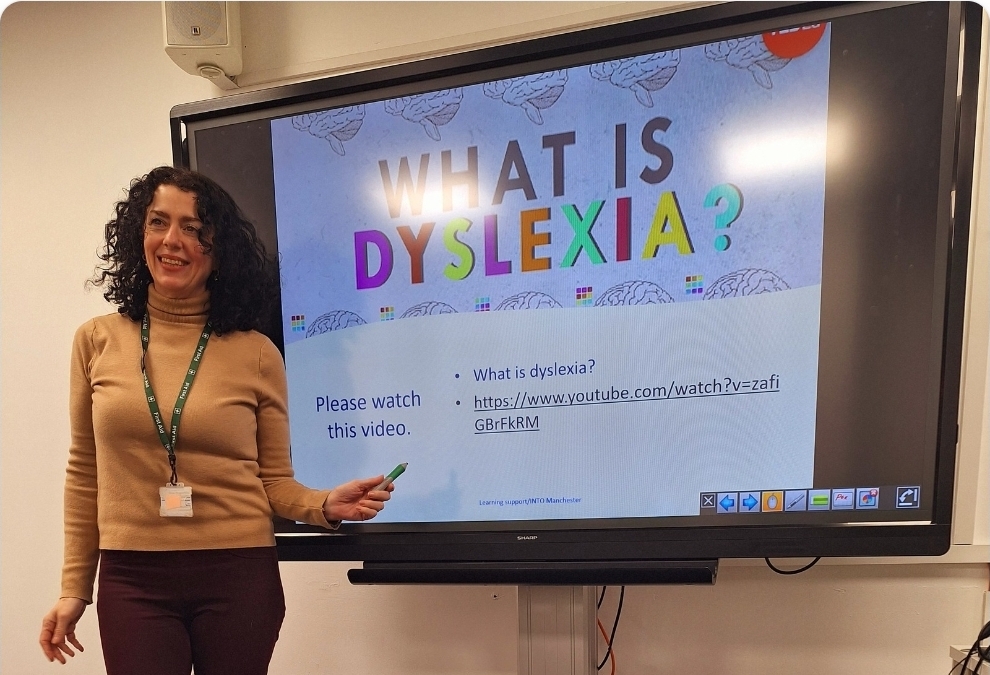
    This hypothetical is actually based on something that happened to me when, in my role as a teacher trainer, I suggested one, small change of approach to another teacher. He couldn’t believe how easy it had been to make things more accessible for his students with dyslexia.

    I see this all the time in my line of work.

    Most teachers go into the profession because they feel a calling. They genuinely want to help, support, and potentially change a young person’s life.

    And yet, in my role, I am often met with resistance and cries of, “I don’t feel qualified to teach someone with special needs,” or “That sounds great, but I don’t have enough time/energy/knowledge to do this.”

    What I hear is fear. Fear that if you try and help a student with a learning difference, you could somehow mess it up.

    A survey conducted by The ADHD Foundation (2017) found that almost half of teachers polled had not been trained to teach young people with ADHD.

    Inclusive strategies for teachers

    More resources dedicated to teacher training are always welcome, but we can’t assume that funding and tools are the all-encompassing solution for ‘neurodiverse’ students. In my experience, initiative can go a long way toward helping all learners.

    First, I recommend that teachers spend just 10 minutes per day — 45 to 50 minutes a week — reading and learning about specific learning differences. I have seen this practice contribute to a significant change in teachers’ awareness and perception of their students.

    Next, implementing meaningful change for students with learning differences can be quite simple. Changing the background color of boards and handouts, for example, greatly benefits students with dyslexia, who sometimes experience vision changes when looking at black writing on a white background. This practice has now become a permanent change at my school.

    Reduce cognitive overload

    The delivery of verbal information is another common and crucial area of potential improvement. A common thread among students with learning differences is poor verbal working memory. This means that their brains are only able to take in so much verbal information before they lose track, and words effectively begin to lose meaning.

    Given this, I advise teachers to use short, clear, and concise sentences, and to avoid the passive voice.

    The passive voice can sound like this: “The first piece of information that needs to be found is the one that was set for you in last night’s homework. It is required that you discuss this with your group.”

    Many students, learning difference or not, find this language very vague and confusing, which can create immense learner stress. Teachers can reword the same instruction like this: “Talk with the people in your group. Answer these three questions.” Accompany and reinforce these prompts with numbered instructions displayed on the board. This approach is clear, literal, and to the point.

    Sometimes, I hear teachers say that they don’t want to “dumb down” their classes by implementing these simple, effective techniques. This couldn’t be further from reality. A learning difference means that a student cannot help the way they process information. These strategies are tools that help them succeed – like eyeglasses to a child with poor vision. We shouldn’t withhold them from students with learning differences.

    The benefits of inclusive teaching

    Research also indicates that accommodations for students with learning differences can benefit the rest of the class. I often hear of ‘neurotypical’ students thanking their teachers for making changes that helped them in unanticipated ways.

    Childhood educators, know this – there is nothing to be scared of in pursuing an inclusive environment for your learners. Any change you can make, even just reading up on a learning difference, could have a significantly positive impact on a student’s life.

    The more often teachers adopt these changes as a permanent part of their practice, the more all students will benefit.

    “We will know that inclusive education has really become embedded in our culture when the term becomes obsolete.” – From Choosing Outcomes and Accommodations for Children (#CommissionsEarned) by Michael F. Giangreco et.al.

  • “Remembering to Remember: Easing the Working-Memory Strain on Students with Learning Differences”

    “Remembering to Remember: Easing the Working-Memory Strain on Students with Learning Differences”

    “The amount that students – from elementary-age to the college years – have to remember and recall at any moment is staggering. It is even more startling when we factor in working memory deficits that are common among students with learning differences.”

    We are inundated with apps and digital tools designed to help us remember, organize, and streamline every moment of our lives. You would think, with all this technology at our fingertips, that we would never worry about forgetting anything ever again.

    Yet, for students with learning differences and ADHD, the vast array of digital memory aids can actually add to the overwhelm rather than ease the load.

    Digital Overload

    James*, a student with dyslexia and ADHD, describes the digital onslaught that greets him every day: “I wake up to one of the multiple alarms on my phone. Because I’ve got so many alarms now, my mind has started to ignore them. When I eventually get out of bed, I switch on my laptop, and the same thing always happens: I’m hit by an onslaught of emails from my college and tutors reminding me of assignments to hand in (or in my case, overdue assignments), changes to my timetable, updates to the college website – the list is endless.”

    He continues: “When one tutor sends an email, they think they are being helpful. But when I get 10 ‘helpful’ emails a day, my brain is set to explode. To be honest, I just ignore them all now because it’s too much for me to process. Having to remember everything is a form of torture.”

    The amount that students – from elementary-age to the college years – have to remember and recall at any moment is staggering. It is even more startling when we factor in working memory deficits that are common among students with learning differences.

    As a learning support teacher, I have lost count of the number of neurodivergent high school and college students who, even weeks into the academic semester, tell me that they still forget the times and rooms of their classes. There are so many reasons for this, ranging from digital overload to distraction and time blindness, but the consequences are always damaging. Students may be summoned to meetings with the school, where it can be almost impossible to explain why they can’t just remember to follow a schedule that seems easy to do from a neurotypical perspective. These same students often struggle with low self-esteem and feeling like they’ve failed.

    Unhelpful Teaching Styles

    Certain teaching styles also add to the overwhelm. Some students are lucky enough to have the rare instructor who centers inclusivity and teaches at a pace that helps with processing information. Many students, however, tell me that their professors “just talk at the class.”

    “It’s so demotivating” says James. “I try really hard to stay focused, but I relent. The teacher’s words sort of dance in and out of my mind and eventually become meaningless.”

    Memory Aids and Classroom Strategies

    Educators must do more to support students with learning differences for whom working memory is an area of need. The following are a few strategies and pointers for educators. Share them with your teacher to start off the school year right:

    • Provide students with a class outline ahead of lecture so that they can follow along and even refer to it afterward to jog their memory.
    • Pause often and work in small breaks during lectures to allow students to digest material.
    • Regularly review previously covered material to reinforce it.
    • Use multisensory methods and instruction techniques that pique interest and improve long-term information retention. Online learning and time management apps are perfect examples of multisensory tools that students can use to great effect both inside the classroom and for independent study.
    • Encourage students to experiment with memory aids, tools, and techniques to support recall at a level that works for them. Expose them to multiple strategies – they may not know what is out there.
    • Don’t assume that all young adults will be able to navigate all things digital. Assume that the average student is bombarded with emails and digital resources, and keep notifications to a minimum.
    • Keep in mind that many students with ADHD and learning differences prefer concrete, traditional tools – like pencils, note pads, planners, and wall calendars – to help them remember.

  • “How Educators’ Implicit Bias Stifles Neurodivergent Learners”

    “How Educators’ Implicit Bias Stifles Neurodivergent Learners”

    “A strengths-based, inclusion-focused pedagogy whereby teachers fundamentally believe that all students, regardless of ability, can thrive when their needs are met can dramatically change learning outcomes for the better.”

    During a recent training session I led on inclusion and learning differences in the classroom, I posed the following question – a tough one – to the teachers in the audience: “Raise your hand if, upon discovering that you have a neurodivergent student in your class, your immediate, unfiltered thought is a negative one?”

    I clarified: “Do you assume, for example, that the student’s learning difference may add to your workload or disrupt the class in some way?”

    A few teachers reluctantly raised their hands.

    Then I asked, “And how many of you, upon finding out that you will be teaching a neurodivergent student, readily think, ‘This is great! I’m going to be able to really take advantage of some of the strengths of their brain.’” Cue lots of bowing heads and sheepish looks.

    As a teacher of 24 years, I know that less-than-favorable unconscious (and sometimes conscious) attitudes absolutely exist within the education system toward students with learning differences. To be clear, I also know that the majority of teachers have benevolent intentions and want the best for their students.

    Still, the longstanding approach in education systems has been that there is a core group of students that educators teach, and then there are “others” who require differentiated learning materials to accommodate their separate needs. This bolt-on-not-built-in approach (a term coined by Margaret Mulholland, an education inclusion specialist) can only ever lead to one way of thinking: Most kids learn in a similar, typical way, and anyone who doesn’t demands extra work – an inconvenience.

    What Drives Negative Attitudes Toward Individuals with Learning Differences?

    Years of attention-grabbing headlines – particularly those written about ADHD – have fueled myths and negative conceptions about neurodiversity and learning differences that have seeped into our subconscious and created a bias that was never of our making. The idea of ADHD not existing and instead being an excuse for a lack of discipline and poor parenting, for example, is still rampant.

    It’s also generational. When I was in school in the ’80s, the term “specific learning difference” didn’t exist, let alone the more positive term, “neurodivergence.” Children who displayed traits that we now recognize as learning differences were regarded as unintelligent and troublesome, their traits only inspiring irritation or sympathy from teachers. (Even the latter can be damaging to self-esteem if a child senses that an authority figure is taking pity on them.)

    The Consequences of Negative Teacher Bias

    Such negative, often implicit biases against these students means potentially disastrous outcomes for self-esteem and future educational success. A UK report found that institutions of higher learning have been slow to provide inclusive educational environments in large part because of negative attitudes from staff toward students with learning differences.1 This included teachers not believing that a student had a disability or difference, and even questioning if a neurodivergent student was capable of studying at their current level.

    Crucially, we must consider intersectionality here and how the overlap of race and gender with learning differences may create further discrimination or disadvantage, as evidenced, for example, by a teacher holding lower expectations of a child who has a certain skin color and a learning difference, or enacting harsher consequences. According to the Bellwether Report, Black students with disabilities account for just over 2% of the total U.S. student population, yet they make up nearly 9% of all students suspended.2

    We Need to Revolutionize Teacher Training

    One in every five of us is said to be neurodivergent3, so it is the rule and not the exception that teachers will educate students with learning differences for the entirety of their careers. Still, educator training to support students with learning differences using inclusive practices, including increasing awareness of implicit biases, remains inadequate or largely unavailable, despite increasing calls for these components to become a core part of teacher training.

    A strengths-based, inclusion-focused pedagogy whereby teachers fundamentally believe that all students, regardless of ability, can thrive when their needs are met can dramatically change learning outcomes for the better. One study showed that, compared to teachers with negative inclusive educational beliefs, teachers who believed that inclusive education is an effective way to teach provided greater positive feedback to students, felt less frustrated, and held lower expectations for future failure.4

    In my role as a learning support specialist, I have collected many anecdotes from neurodivergent students about times when a teacher delivered instruction in a more inclusive manner, surely with learning differences exclusively in mind, that ended up making the lesson much more accessible to the entire class, to the delight of all students. Known as the curb-cut effect, it demonstrates that inclusive teaching can benefit not just a target group, but all students.

    Apart from teacher training on inclusive practices, we also need more neurodivergent teachers who, by virtue of living with a condition or learning difference, will understand the experiences of students with learning differences and approach instruction in a more empathetic manner.

    It’s possible that there are more neurodivergent educators out there than we know. They remain in the shadows because of fears related to disclosing a learning differences and being judged negatively. The unfortunate consequence of stigma is that it leaves a distinct lack of neurodivergent role models for students. If educational institutions start to actively recruit, support, and learn from neurodivergent teachers, then schools as a whole will be more inclined to look positively upon their neurodivergent students.

    I feel instinctively that the tide is turning. It may be slow, but I’m heartened by how much societal awareness of neurodiversity has grown. I’ve observed that teachers and students are becoming more open about their differently wired brains. In my lifetime, I hope that all teachers will walk into a classroom and immediately feel nothing but delight and excitement – never dread – at the prospect of teaching students with wonderfully neurodivergent brains.